Table of Contents
What Is Blogging for Beginners? Everything You Need to Know
If you’re interested in blogging for beginners, you’ve come to the right place. Blogging has transformed from simple online journals into a lucrative business opportunity that anyone can pursue from anywhere in the world. Whether you’re passionate about technology, cooking, travel, or any other subject, blogging for beginners offers the flexibility to share your expertise and generate income on your own schedule.
The beauty of modern blogging lies in its accessibility. With over 600 million blogs worldwide and new bloggers joining daily, there’s never been a better time to start your blogging journey. Thanks to internet connectivity and mobile technology, you can maintain your blog while traveling, working remotely, or managing other commitments. Your blog adapts to your lifestyle, not the other way around.
What makes blogging for beginners so attractive?
- Start with zero investment using free platforms
- Work from anywhere with internet access
- Choose topics you're genuinely passionate about
- Build a personal brand and online presence
- Generate passive income over time
- Generate passive income over time
- Connect with like-minded people globally
Why Start Blogging for Beginners in 2026
The blogging landscape in 2026 offers unprecedented opportunities for new bloggers. Here’s why now is the perfect time to begin your blogging journey:
Market Growth: The content creation industry continues expanding, with businesses actively seeking authentic voices and fresh perspectives. Bloggers who establish themselves now can capture growing audience attention.
Monetization Options: From affiliate marketing and sponsored content to digital products and online courses, successful bloggers have multiple revenue streams available. Studies show that consistent bloggers typically start earning within 6-12 months of launching their blogs.
Low Entry Barriers: Unlike traditional businesses requiring significant capital, blogging for beginners starts completely free. You need only time, dedication, and willingness to learn blogging best practices.
Personal Branding: A well-maintained blog establishes you as an authority in your niche, opening doors to speaking engagements, consulting opportunities, and professional networking that extends far beyond your blog traffic.
How to Set Up Your First Blog: Blogging for Beginners Tutorial
Choosing the Best Free Blogging Platform
When starting your blogging journey, selecting the right platform is crucial. Here are the two best free options for blogging beginners in 2026:
WordPress.com - Best Overall for Beginners
WordPress.com is the recommended choice for serious bloggers who want room to grow:
Advantages:
- Robust content management system used by 43% of all websites
- Advanced categorization and tagging options
- Trackback functionality for networking with other bloggers
- Efficient sidebar and widget management
- Mobile-responsive themes included
- Built-in SEO optimization tools
- Easy migration path to self-hosted WordPress later
Perfect for: Bloggers planning to monetize and scale their blog over time
Blogger.com - Best for Quick Start

Blogger.com is Google’s blogging platform offering simplicity:
Advantages:
- Faster indexing by Google search engines
- Extremely simple, user-friendly interface
- Seamless integration with Google services
- Zero learning curve for complete beginners
- Reliable Google infrastructure
Perfect for: Hobby bloggers or those wanting the quickest possible setup
Step-by-Step Blog Setup Tutorial
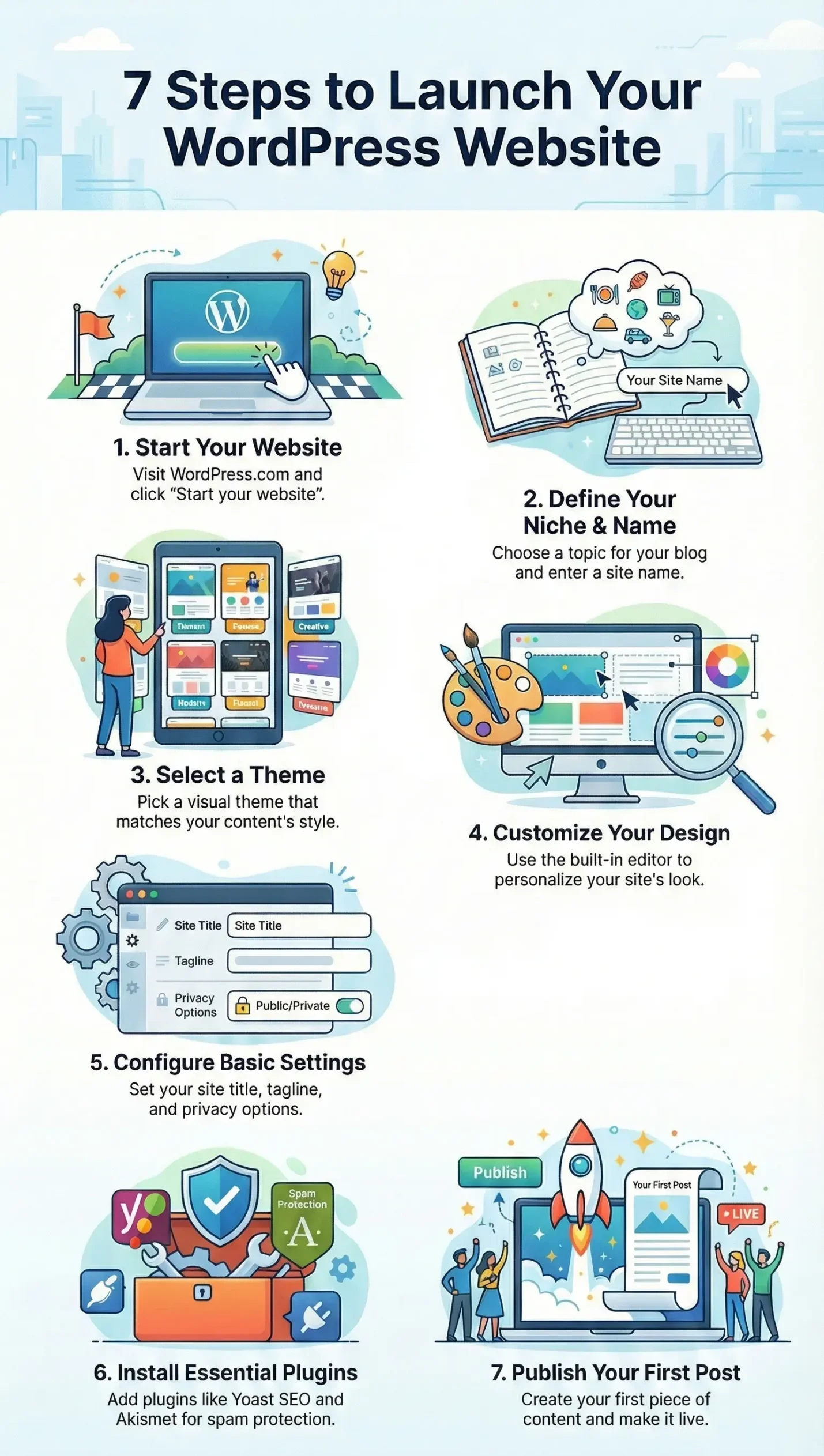
For WordPress.com (Recommended):
- Visit WordPress.com and click “Start your website”
- Choose your blog niche and enter your preferred site name
- Select a theme that matches your content style
- Customize your design using the built-in editor
- Configure basic settings (site title, tagline, privacy)
- Install essential plugins (Yoast SEO, Akismet for spam protection)
- Create your first blog post and publish it
For Blogger.com
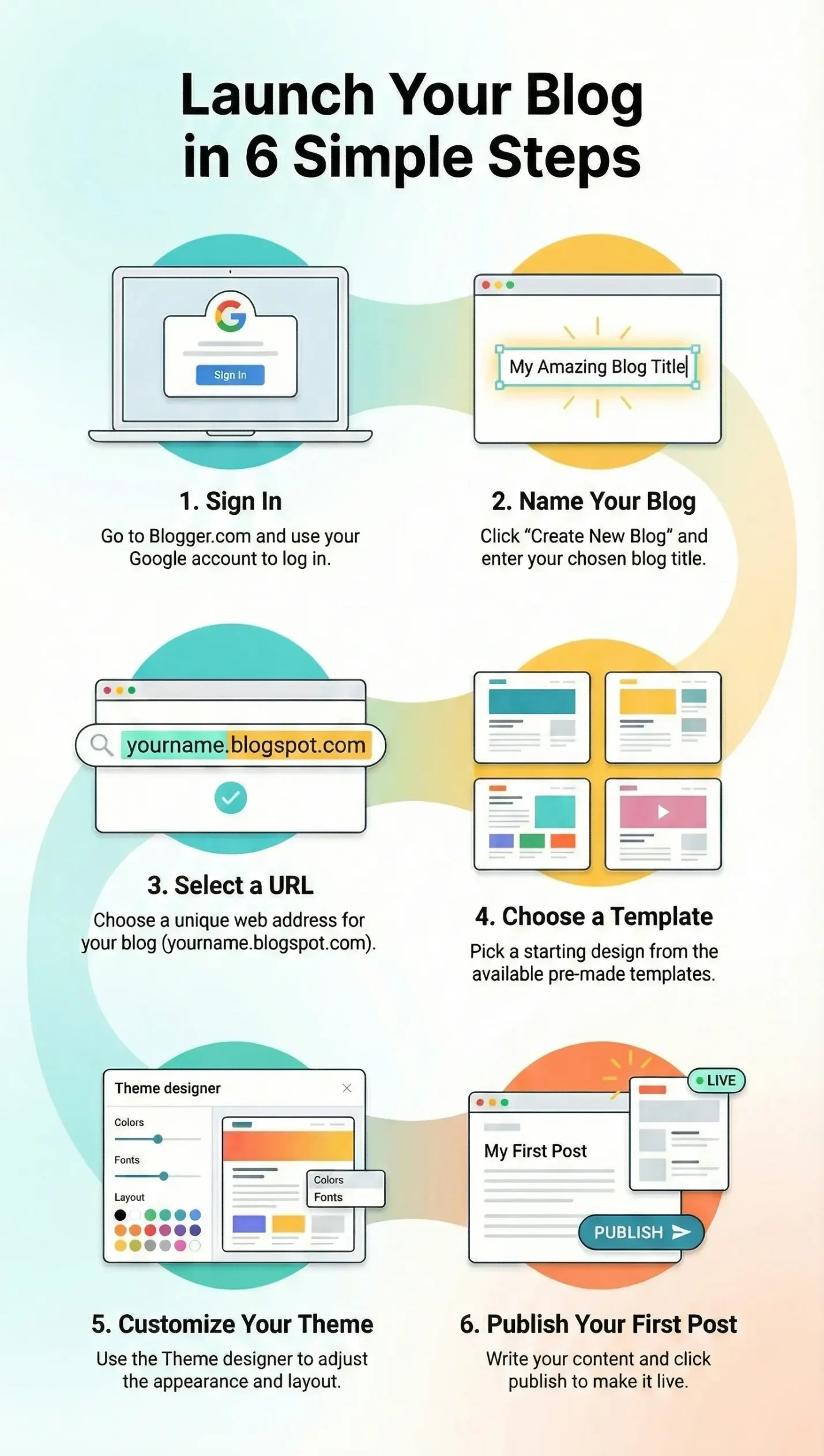
- Visit Blogger.com and sign in with your Google account
- Click “Create New Blog” and choose your blog name
- Select a URL (yourname.blogspot.com)
- Choose a template from available options
- Customize appearance through the Theme designer
- Write and publish your first post
Pro Blogging Tip:
Whichever platform you choose, spend 30 minutes exploring all settings and features before publishing your first post. Understanding your blogging platform saves time later.
Essential Blogging Terms Every Beginner Should Know
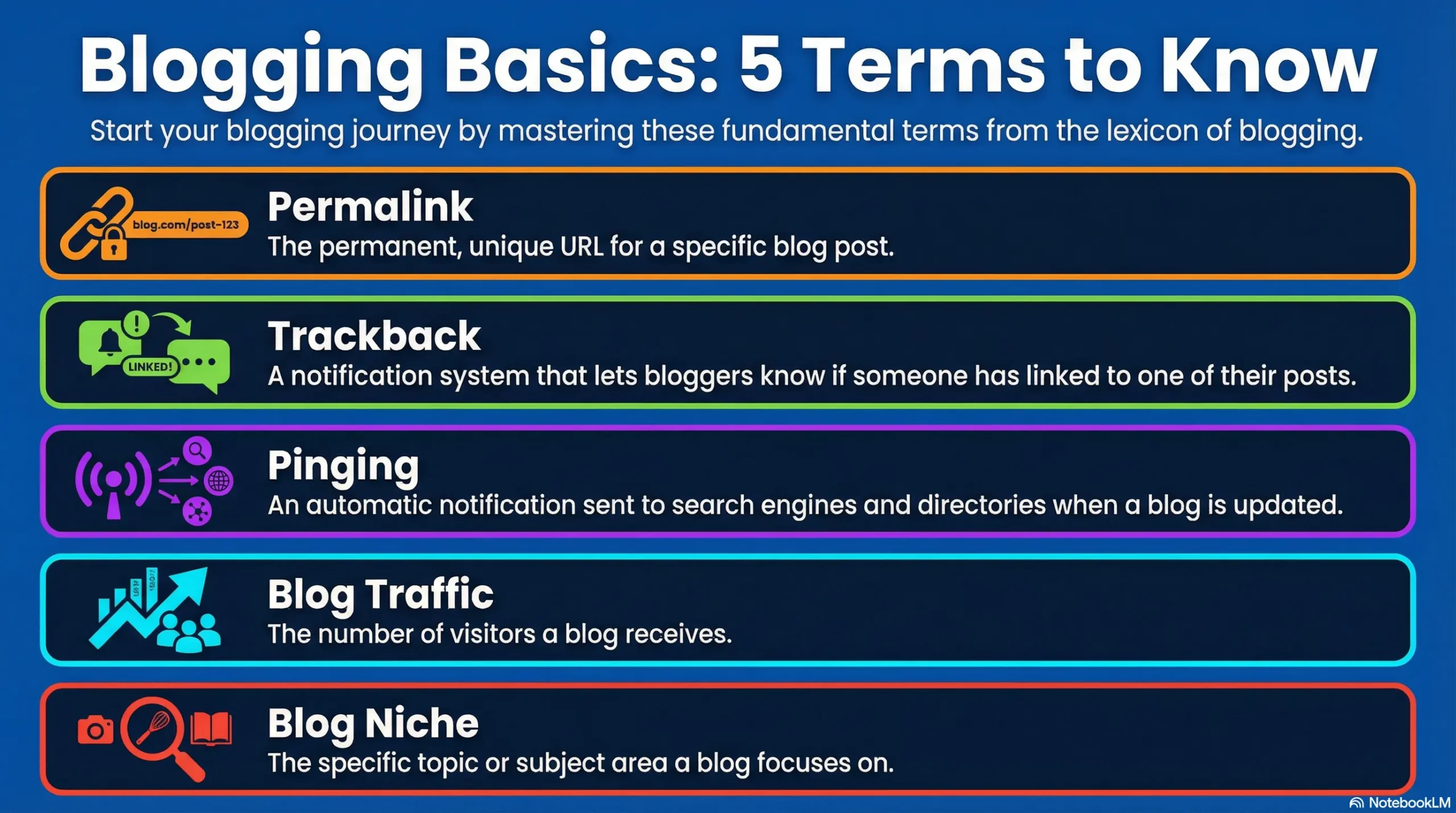
Understanding blogging terminology helps you navigate the blogging community confidently and implement best practices effectively.
Permalink (Permanent Link)
A permalink is the permanent URL that directs readers to a specific blog post. This unique address remains unchanged even as you publish new content, making it easy for readers to bookmark and share your posts.
Example: yourblog.com/blogging-for-beginners-guide/
Why it matters: Search engines use permalinks to index your content. Clean, keyword-rich permalinks improve your blog’s SEO performance and make your blog posts more shareable on social media.
Trackback
A trackback is a notification system that alerts other bloggers when you reference their content. When you mention another blog post in your article, a trackback creates a link back to your post on their site, fostering community engagement and networking within your blog niche.
Blogging best practice: Always enable trackbacks to build relationships with other bloggers in your niche. This generates quality backlinks and increases your blog traffic through referrals.
Note: Trackbacks are available on WordPress but not on Blogger.
Pinging
Pinging is the automated process of notifying blog aggregators and search engines when you publish new content. Pinging ensures your latest posts appear quickly on blog directories, RSS feed readers, and search engine results.
Popular ping services:
- Pingomatic
- Feedburner
- Google Blog Search
Why successful bloggers use pinging: It accelerates the indexing process, helping your blog posts rank faster in search results and reach your target audience sooner.
Blog Traffic
Blog traffic refers to the number of visitors who view your blog content. Growing blog traffic is the primary goal for most beginner bloggers, as higher traffic leads to more opportunities for monetization and influence.
Traffic sources include:
- Organic search (Google, Bing)
- Social media referrals
- Direct visits from bookmarks
- Referral traffic from other blogs
Blog Niche
Your blog niche is the specific topic or category your blog focuses on. Successful blogs typically concentrate on one niche rather than covering multiple unrelated topics, which helps attract a dedicated audience and establish authority.
Choosing Your Blog Niche: Critical First Step for Blogging Beginners
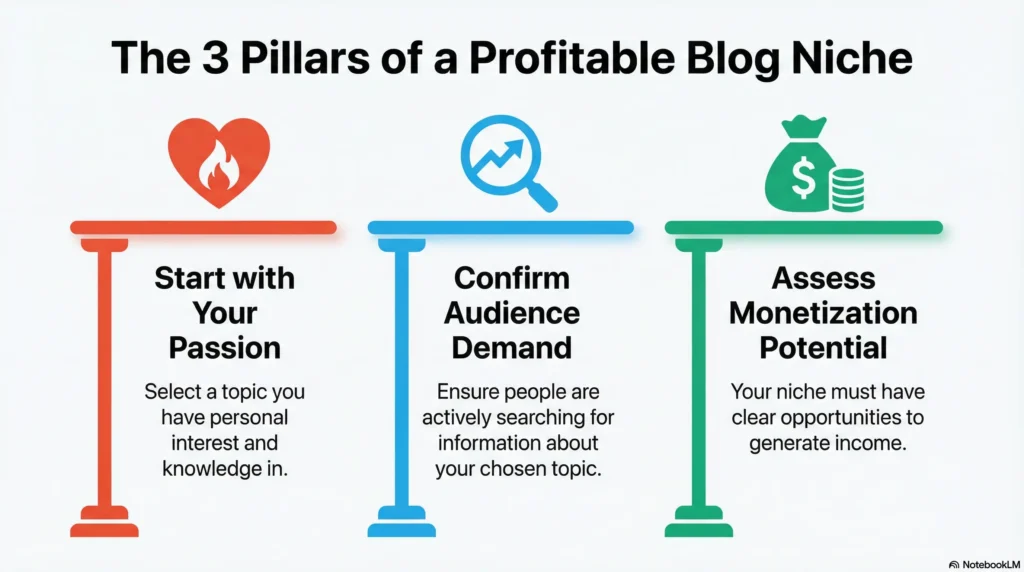
Before creating content, selecting the right blog niche determines your long-term blogging success. Your niche should balance three factors:
1. Personal Passion and Knowledge
Choose a blog niche you’re genuinely interested in and knowledgeable about. Blogging requires consistent content creation over months and years—passion sustains motivation when initial enthusiasm fades.
Ask yourself:
- Could I write 100+ articles about this topic?
- Do I naturally stay updated on this subject?
- Would I discuss this topic even without payment?
2. Audience Demand
Verify that people actively search for information in your potential niche. Use Google Trends, keyword research tools, or browse existing successful blogs in that category.
Profitable blog niches for beginners in 2026:
- Personal finance and investing
- Health and fitness
- Technology reviews
- Personal development
- Digital marketing
- Travel and adventure
- Food and recipes
- Parenting and family
3. Monetization Potential
Consider how you’ll eventually monetize your blog. Some niches offer more income opportunities through affiliate programs, sponsored content, or digital products.
High-monetization niches typically include:
- Business and entrepreneurship
- Technology and software
- Finance and investing
- Health and wellness
Pro Blogging Tip:
The best blog niche sits at the intersection of your expertise, audience interest, and monetization potential. Don't choose a niche solely for money—authenticity attracts and retains readers.
Creating Engaging Blog Content: Blogging Tips for Beginners
The difference between successful blogs and abandoned blogs lies primarily in content quality and writing style. Here are essential blogging tips for creating content that attracts readers and keeps them returning.
1. Write Conversationally, Not Academically
Blog readers seek information, but they want content that’s easy to digest and enjoyable to read. Think about your own reading habits—would you rather read a dense academic paper or an engaging article by your favorite author?
Blogging best practices for conversational writing:
- Use short paragraphs (2-4 sentences maximum)
- Include subheadings every 200-300 words
- Write in second person (“you”) not third person (“one”)
- Use contractions (you’re, it’s, don’t)
- Ask rhetorical questions to engage readers
- Share relevant personal anecdotes
2. Address Readers Individually
Successful bloggers write as if they’re having a one-on-one conversation with a friend, not delivering a speech to an audience. Use “you” instead of “everyone” or “readers.”
3. Compare these approaches:
❌ Impersonal: “Bloggers should create content regularly to maintain audience engagement.”
✅ Conversational: “You should publish blog posts consistently to keep your readers engaged and coming back for more.”
The second example feels more personal and actionable, making readers more likely to follow your blogging advice.
4. Inject Your Unique Personality
Your personality differentiates your blog from thousands of other blogs covering similar topics. Readers connect with people, not faceless content producers.
Ways to showcase personality in your blog:
- Share relevant personal experiences and failures
- Use humor where appropriate (don’t force jokes)
- Express opinions backed by reasoning
- Include unique perspectives on common topics
- Let your authentic voice shine through
Example: Two gadget blogs might review the same smartphone, but one blogger’s witty commentary and personal testing anecdotes make their review more memorable and shareable than a generic specification list.
5. Building Your Personal Brand Through Blogging
Think of your blog as your personal brand. When people need information about your niche, you want them to immediately think of your blog—just as people think of McDonald’s for fast food or Nike for sportswear.
Brand-building blogging strategies:
- Maintain consistent posting schedule (readers know when to expect new content)
- Develop a unique visual style (logo, color scheme, formatting)
- Use consistent author voice across all posts
- Engage with comments and build community
- Share behind-the-scenes insights about your blogging journey
Statistics prove it works: Bloggers with strong personal brands earn 3x more than generic content creators and build loyal audiences that follow them across platforms.
6. Optimize Every Blog Post for Readability
Even brilliant insights fail if readers struggle to consume your content. Format blog posts for easy scanning and comprehension.
Content formatting checklist for beginner bloggers:
- Use descriptive H2 and H3 headings
- Include bullet points for lists (like this one)
- Add relevant images every 300-500 words
- Bold important phrases sparingly
- Keep sentences under 20 words when possible
- Use transition words between paragraphs
- Include white space for visual breathing room
7. Provide Actionable Value in Every Post
The most successful blogs consistently deliver actionable insights readers can immediately implement. Avoid vague advice—give specific steps, examples, and resources.
Compare these blogging tips:
❌ Vague: “You should improve your blog’s SEO.”
✅ Actionable: “Install the Yoast SEO plugin on WordPress, then optimize each post by including your focus keyword in the title, first paragraph, and at least one H2 heading.”
Actionable content builds trust and positions you as an authority in your blog niche.
Common Blogging Mistakes Beginners Make (And How to Avoid Them)
Learning from others’ mistakes accelerates your blogging success. Here are the most common pitfalls new bloggers encounter:
1. Inconsistent Posting Schedule
- The mistake: Publishing 5 posts in week one, then disappearing for a month.
- Why it hurts: Inconsistency confuses search engines and disappoints readers who don’t know when to expect new content. Google favors blogs that publish consistently.
- The solution: Start with a realistic schedule you can maintain—even one quality post per week beats irregular bursts. Mark blog writing time on your calendar like any important appointment.
2. Ignoring SEO Basics for Blogging
- The mistake: Writing great content but forgetting search engine optimization, making it impossible for people to discover your blog.
- Why it hurts: Without basic SEO, your blog posts won’t appear in Google search results, severely limiting your blog traffic growth.
- The solution: Learn fundamental SEO for blogging—keyword research, optimized titles, meta descriptions, internal linking, and proper heading structure. Use free tools like Google Keyword Planner or Ubersuggest.
3. Trying to Cover Too Many Topics
- The mistake: Writing about cooking, technology, parenting, and fitness all on one blog.
- Why it hurts: Scattered content prevents you from establishing authority in any single blog niche and confuses your target audience.
- The solution: Focus on one primary niche, possibly with 2-3 related sub-topics. Example: A fitness blog could cover workouts, nutrition, and mental wellness—all related to the health niche.
4. Not Building an Email List from Day One
- The mistake: Assuming social media followers are sufficient for audience building.
- Why it hurts: You don’t own social media followers—platforms can change algorithms or shut down. Email subscribers belong to you.
- The solution: Install an email signup form immediately, even before publishing your first post. Offer a free resource (checklist, ebook, template) as an incentive for subscribing.
5. Giving Up Too Soon
- The mistake: Expecting immediate blog traffic and income, then quitting after three months.
- Why it hurts: Blogging success requires 6-12 months of consistent effort. Most successful bloggers struggled initially.
- The solution: Set realistic expectations. Focus on improving your blogging skills and providing value. Track small wins—your first 100 visitors, first comment, first email subscriber. Success compounds over time.
6. Not Engaging With Your Blog Community
- The mistake: Publishing posts but never responding to comments or interacting with other bloggers.
- Why it hurts: Blogging thrives on community and relationships. Ignoring engagement limits your blog’s growth potential and networking opportunities.
- The solution: Reply to every comment on your blog. Comment thoughtfully on other blogs in your niche. Share and promote fellow bloggers’ content. Building relationships increases your visibility and blog traffic.
Blogging for Beginners: Next Steps in Your Journey
Congratulations! You now have the foundational knowledge to launch your blogging journey successfully. Here’s your immediate action plan:
This Week:
- Choose your blog niche based on passion and market demand
- Set up your free blog on WordPress.com or Blogger
- Customize your theme and complete your profile
- Write and publish your first blog post (don’t overthink it!)
- Install essential plugins (if using WordPress)
This Month:
- Publish 4-8 quality blog posts
- Learn basic keyword research for SEO
- Set up Google Analytics to track blog traffic
- Create social media profiles for your blog
- Join 2-3 blogging communities in your niche
- Comment on 10 other blogs to start networking
Within 3 Months:
- Establish consistent publishing schedule
- Build email list to 50-100 subscribers
- Monetize with affiliate marketing or ads
- Guest post on related blogs for exposure
- Analyze blog traffic data and optimize top posts
Remember
Every successful blogger started exactly where you are now. The difference between those who succeed and those who give up is consistency and persistence. Focus on creating valuable content, learning continuously, and engaging authentically with your audience.
Frequently Asked Questions About Blogging for Beginners
How much does it cost to start blogging for beginners?
You can start blogging completely free using platforms like WordPress.com or Blogger. These platforms provide hosting, basic themes, and all essential features at no cost. As your blog grows, you might choose to invest in a custom domain ($10-15/year) and premium themes ($30-100), but these are optional. Many successful bloggers run profitable blogs for years on free platforms before upgrading.
How long does it take to make money blogging?
Most beginner bloggers start earning within 6-12 months of consistent posting. However, income varies dramatically based on niche, content quality, posting frequency, and monetization strategies. Realistic expectations: $0-100 in months 1-3, $100-500 in months 4-6, $500-2,000 in months 7-12. Some bloggers exceed these numbers; others take longer. Focus on providing value rather than quick profits.
Do I need technical skills to start blogging for beginners?
No technical skills required! Modern blogging platforms like WordPress and Blogger are designed for complete beginners with no coding knowledge. If you can send an email and use social media, you can start a blog. The platforms provide intuitive editors that work like Microsoft Word. Advanced customization requires technical skills, but thousands of successful bloggers never touch code.
What should I write about in my blog?
Choose a blog niche at the intersection of your knowledge, passion, and market demand. The best blog topics are ones you can discuss extensively without losing interest. Popular profitable niches include personal finance, health and fitness, technology, digital marketing, travel, food, and personal development. Research your chosen niche to ensure adequate audience demand before committing.
How often should beginner bloggers publish new posts?
Consistency matters more than frequency. Publishing one quality post weekly beats publishing five posts one week then disappearing for a month. Most successful bloggers publish 1-3 times per week. Choose a schedule you can maintain long-term—blogging success requires sustained effort over months. Google favors blogs that publish consistently over those with irregular posting patterns.
Can you start a successful blog in 2026, or is it too late?
It’s absolutely not too late to start blogging in 2026! While the blogging landscape is competitive, there’s always room for authentic voices with unique perspectives. Niche-focused blogs still succeed regularly. The key is choosing an underserved niche or bringing a fresh angle to popular topics. Over 600 million blogs exist, but most abandon their blogs within months—consistency gives you a competitive advantage.
What’s the difference between blogging and vlogging?
Blogging involves written content published on websites, while vlogging (video blogging) involves creating video content typically published on YouTube. Both are valid content creation methods. Blogging generally requires less equipment and lower production time. Many content creators do both—blogging for SEO and detailed information, vlogging for personality and demonstration. Choose based on your strengths and audience preferences.
How do I get blog traffic as a complete beginner?
Growing blog traffic requires multiple strategies: (1) SEO optimization for organic Google traffic, (2) social media promotion across relevant platforms, (3) commenting on other blogs in your niche, (4) guest posting on established blogs, (5) building an email list, (6) participating in blogging communities, and (7) creating shareable, valuable content. Focus on SEO first—organic search provides sustainable long-term traffic that compounds over time.
Key Takeaways: Blogging for Beginners Summary
- Blogging for beginners is accessible, affordable, and offers genuine income potential with consistent effort
- Choose between WordPress.com (more features) or Blogger (simpler, faster Google indexing) for your free blog
- Select a blog niche you’re passionate about with proven audience demand and monetization potential
- Write in a conversational, personal style that showcases your unique personality and expertise
- Avoid common blogging mistakes like inconsistent posting, ignoring SEO, and giving up too soon
- Success requires 6-12 months of consistent content creation—set realistic expectations
- Focus on providing actionable value in every blog post rather than chasing quick profits
- Build your email list from day one to own your audience relationship
- Engage authentically with other bloggers to build community and increase visibility
- Start today—every successful blogger began as a complete beginner
Start Your Blogging Journey Today
You now have everything needed to begin blogging successfully. The difference between dreamers and successful bloggers is taking action. Choose your platform, select your niche, and publish your first post this week.
Remember: your first blog post won’t be perfect—and that’s okay. Every blogger’s first post was awkward. What matters is starting, learning, and improving with each post you publish.
The blogging community welcomes beginners who show up consistently and provide genuine value to their readers. Your unique perspective deserves to be shared.
Ready to join thousands of successful bloggers? Create your free blog today and start your journey!
About This Guide: This comprehensive blogging for beginners guide provides everything needed to start, grow, and monetize a successful blog in 2026. Whether you’re interested in passive income, personal branding, or sharing your expertise, this step-by-step tutorial gives you the foundation for blogging success.
Questions about blogging for beginners?
Have tips to share from your own blogging journey? Leave a comment below—I read and respond to every one!